

How to Choose a Coat After 50: Length, Shape and Warmth Without Bulk
A coat is the one garment other people see most. It goes over every outfit you own, which means it decides how all of them read from October to March — and it's worth more thought than the pieces underneath it.
Four things settle it: length, shape, warmth and how it fits over a sweater.
Length Decides the Proportion
- Cropped or hip length. Best over wide leg pants, where the volume is below. Over a long dress it cuts the body in half.
- Mid-thigh to knee. The most versatile length. It covers a dress hem or stops cleanly above it, and it works with both trousers and skirts.
- Below the knee or full length. The most lengthening, and the only length that fully covers a maxi dress. Check it clears your calf when you walk.
The rule that matters: a coat should either cover what's underneath or end well above it. A hem peeking out below a coat by two inches looks unplanned.
Three Shapes Worth Owning
The straight or single-breasted coat
The one to buy first. It layers over anything, belts if you want a waist, and doesn't date.
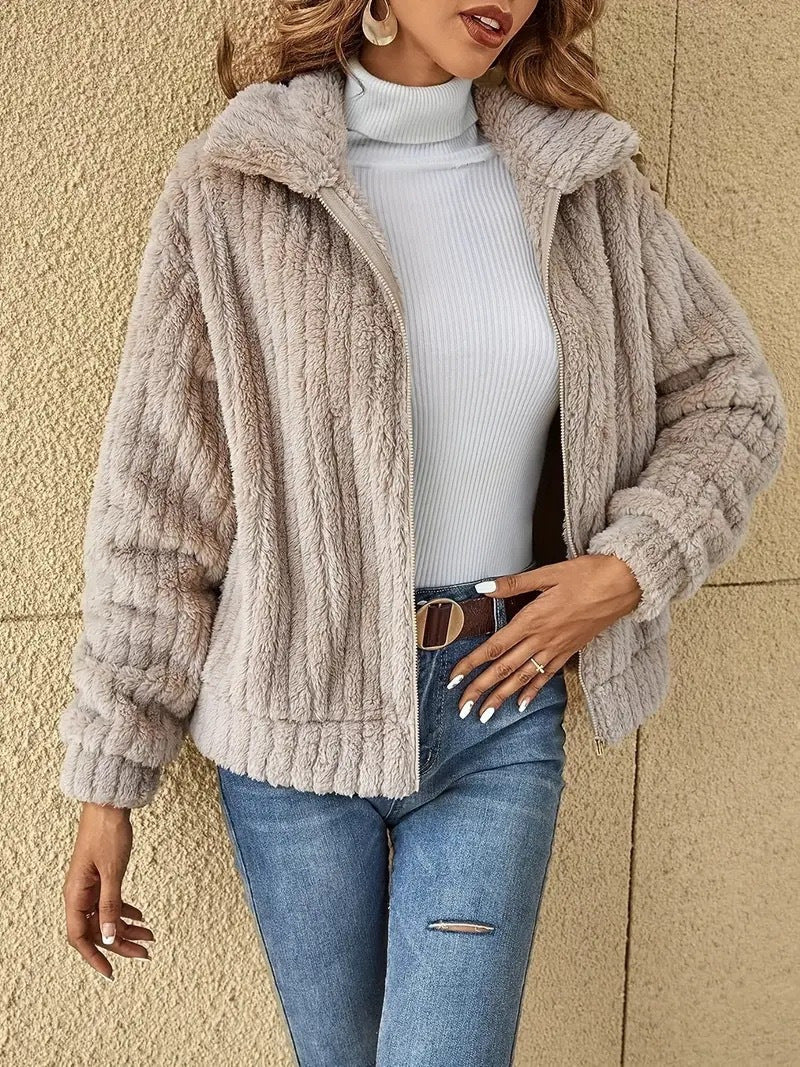
The short plush or fleece jacket
Warmth with almost no weight, and easy to wear over a knit for the school run or errands. Keep the bottom half slim so the volume stays deliberate.
The longline coat
The most formal of the three and the best over dresses. Worn open it creates a full-height vertical line, which is why it flatters nearly everyone.
Warmth Without Bulk
Warmth comes from what traps air, not from thickness alone. A dense wool-blend coat over a fine knit is usually warmer, and always slimmer, than a bulky coat over a chunky sweater.
- Wool and wool blends. Warm, hold their shape, tailored look.
- Fleece and sherpa. Light and very warm, casual in feel.
- Quilted and padded. Warmest for the weight, but add width — choose a fitted cut rather than sizing up.
- Faux fur trim or collar. Adds warmth at the neck, which is where most heat is lost.
Size It for the Layer, Not the Body
Try a coat on over the heaviest thing you'll wear under it. Then check three points:
- Shoulder seam. It should sit at the edge of your shoulder or just past it. This is the one thing that can't be altered cheaply.
- Arms crossed. Cross your arms in front of you. If it pulls across the back, it's too small regardless of how it looks standing still.
- Buttoned. It should close without straining over a sweater, even if you plan to wear it open.
Color
A neutral coat goes over more of your wardrobe: camel, navy, charcoal, black, cream. A colored coat is the more interesting purchase and the second one to buy, not the first — it has to work with everything underneath it.
Frequently Asked Questions
What coat length is most flattering?
Knee length for versatility, below the knee for the longest line. Cropped works best when the volume of the outfit is below the waist.
Should I size up in a coat?
Only enough for the layer you'll wear underneath. Sizing up beyond that drops the shoulder seam down the arm, which reads as oversized rather than roomy.
How many coats do I actually need?
Two covers most climates: a mid-weight neutral for daily wear, and one warmer or dressier option for evenings and cold weather.
What do I wear under a coat without getting bulky?
A fine-gauge knit or a thin sweater rather than a chunky one. Save the heavy knits for days you won't be wearing a coat over them.
Start Here
Browse coats and jackets and knitwear, or see the fall outfit formula for how the coat fits the rest of the season.
Leave a comment
This site is protected by hCaptcha and the hCaptcha Privacy Policy and Terms of Service apply.