

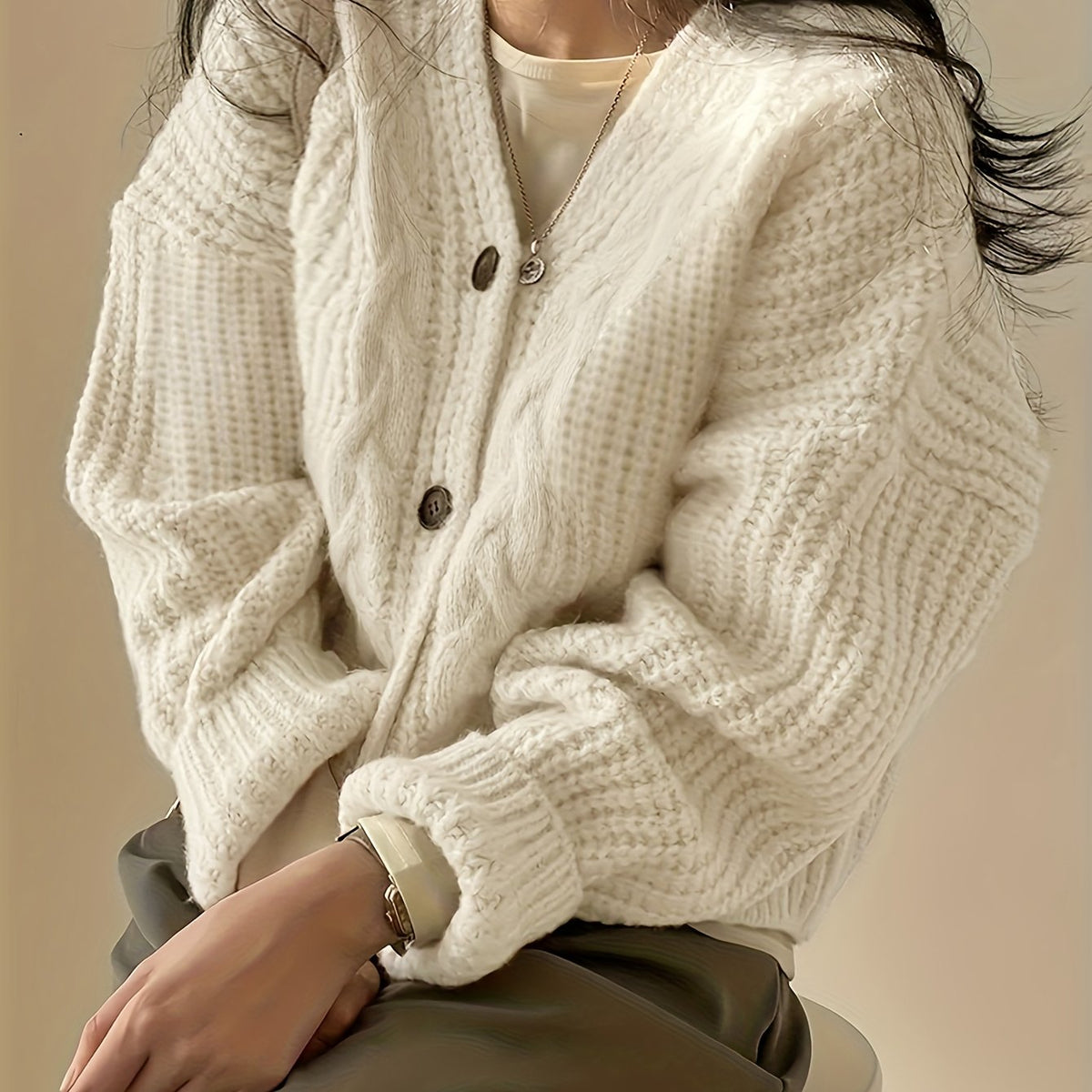
How to Wear a Cardigan After 50 Without Looking Bulky
A cardigan is the most useful piece in a fall wardrobe and the one most likely to age an outfit. It isn't the cardigan's fault. Three specific things go wrong — the length, the weight of the knit, and how it's fastened — and all three are fixable.
Here's how to choose one and four ways to wear it.
Why Cardigans Go Wrong
- The hem lands at the widest point. A cardigan that ends exactly at the fullest part of the hip draws a horizontal line there. An inch up or several inches down solves it.
- The knit is too heavy for the body underneath. A thick knit over a thick top is two layers of volume with no shape between them.
- It's buttoned all the way. Fully buttoned, a cardigan becomes a sweater with a seam down the front — and it hides the vertical line that makes an open cardigan lengthening.
Choose the Length First
Hip length
The safest length if it clears the hip rather than stopping on it. Works with wide leg pants and with dresses.
Cropped or waist length
Best over a dress or a high-waisted trouser, where it defines the waist instead of cutting the torso. Avoid it over a hip-length top — you get two hems within four inches of each other.
Duster or longline
The most flattering length for most people, because the open front runs the full height of the body. Wear it open, and keep what's underneath fairly slim so the coat-like line stays clean.
Weight and Fabric
A fine-gauge knit skims. A chunky knit adds volume wherever it sits — which is useful over a straight silhouette and unhelpful over a full one.
- Fine gauge. Layers under a coat, travels well, works indoors without overheating.
- Mid weight. The workhorse. Warm enough on its own in October, slim enough to go over a blouse.
- Chunky. Best as an outer layer, open, over something simple. Not for layering under a coat.
Whatever the weight, check the shoulder seam sits where your shoulder ends. A dropped shoulder on a heavy knit widens the whole upper body.
Four Ways to Wear It
1. Open over a column
Same-color top and bottom, cardigan open over it. This is the single most reliable way to wear one — the unbroken column plus the vertical opening does all the work.
2. Belted
A longline cardigan belted at the natural waist turns a shapeless layer into a defined one, and it works over a dress you'd otherwise put away for the season.
3. Buttoned partially, half tucked
Fasten the middle two buttons only, leave the rest open, and tuck the front hem of the top underneath. It creates a waist without a belt.
4. As the top itself
A button-front cardigan worn closed over a camisole, with trousers, reads as a knit top and is cooler indoors than a sweater.
What to Wear Underneath
The visible edge of what's under the cardigan is what makes it look styled. A collar, a cuff, a contrasting neckline — something with a defined edge. A blouse under a knit is the easiest version of this.
Slim on the bottom half, volume on top; volume on both is the combination that reads as bulk.
Frequently Asked Questions
Should a cardigan be fitted or loose?
Loose through the body, correct at the shoulder. The shoulder seam is the fit point that matters — everything below it can be relaxed.
Can I wear a cardigan to a wedding or a dressier event?
Yes, in a fine knit that matches the dress closely in color. See our fall wedding guest guide for how to plan the layer with the dress.
What length works if I'm petite?
Cropped or hip length, and check the sleeve — a sleeve past the wrist bone shortens the arm and makes the whole cardigan look borrowed.
How do I stop a cardigan from stretching out?
Fold it rather than hanging it. Hanging a knit by the shoulders is what creates the bumps that never come out.
Start Here
Browse cardigans and knitwear, or see the full fall outfit formula for how the cardigan fits into the rest of the season.
Leave a comment
This site is protected by hCaptcha and the hCaptcha Privacy Policy and Terms of Service apply.